
By Dr. Nalini Chilkov, L.Ac., OMD
Founder, American Institute of Integrative Oncology | Creator, OutSmart Cancer® System
Introduction
Pancreatic cancer is one of the most aggressive and lethal cancers, with a five-year survival rate of only 11%. Even after radical surgery—the only potentially curative option—many patients experience early recurrence and limited survival. To improve outcomes, we must look beyond tumor size and stage, and toward the cancer terrain—the whole biosystem tumor micro- environment that influences cancer progression and regresssion.
Recent research highlights the value of immune‑nutritional biomarkers that reflect both systemic inflammation and nutritional status. These indicators help us assess not only the biology of the tumor but the resilience of the patient.
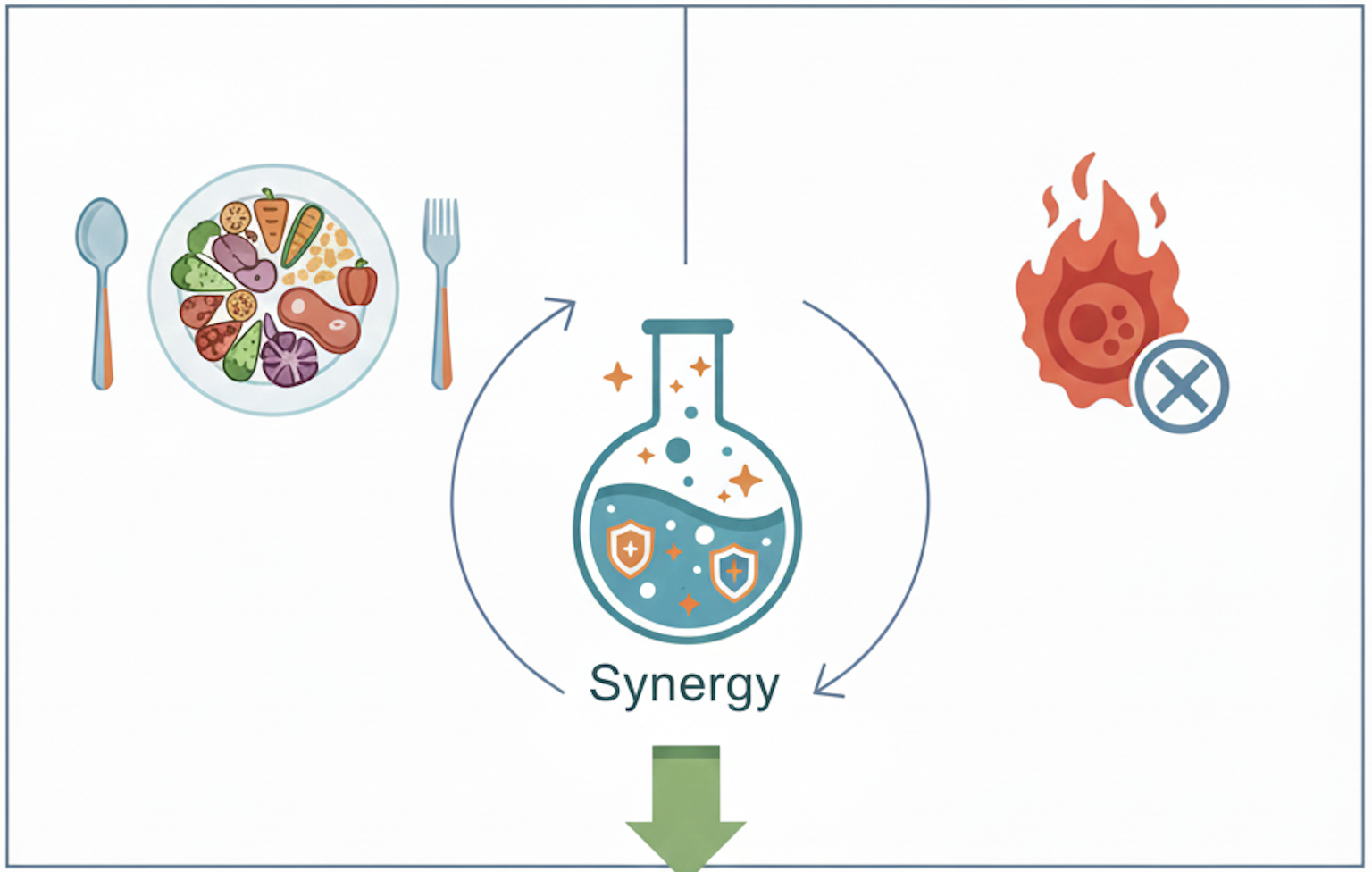
What is the Fibrinogen-to-Prealbumin Ratio (FPR)?
The fibrinogen-to-prealbumin ratio (FPR) is a novel biomarker that integrates two critical components:
- Fibrinogen, a protein involved in blood clotting and inflammation, which is often elevated in cancer.
- Prealbumin, a short half-life protein that reflects real-time nutritional status and declines during inflammation.
Together, FPR provides a sensitive snapshot of the inflammatory and nutritional state of a cancer patient—two key dimensions of the Cancer Terrain.
Key Research Findings
A 2023 study published in Frontiers in Oncology examined 263 patients with resectable pancreatic cancer and found that:
- Patients with FPR ≥ 0.29 had a median survival of only 11.8 months, compared to 22.3 months for those with FPR < 0.29.
- High FPR was an independent predictor of poor prognosis, even after adjusting for tumor stage and other markers (HR = 2.592; P = 0.001).
- FPR correlated with adverse features, including elevated CA19-9 levels, more jaundice, and pancreatic head tumors.
- A new prognostic nomogram combining FPR with CA19-9, CEA, CONUT score, and TNM stage significantly outperformed TNM staging alone.
This study confirms that FPR is more than a laboratory number—it is a meaningful indicator of a patient’s biological response to cancer and surgery.
Clinical Significance
High FPR suggests a cancer terrain marked by inflammation and malnutrition—two key drivers of tumor progression and poor recovery. This has practical implications:
- Nutritional intervention and inflammation control should be prioritized preoperatively in patients with high FPR.
- Neoadjuvant therapy may be considered in borderline cases where high FPR predicts poor surgical outcomes.
- FPR can help identify patients at high risk of postoperative complications, such as pancreatic fistulas.
By integrating FPR into treatment planning, clinicians can better personalize care, optimize timing for surgery, and support the body’s capacity to heal.
Comparing FPR to Other Biomarkers
| Marker | What It Reflects | Clinical Insight |
| NLR (Neutrophil-to-Lymphocyte Ratio) | Inflammation | High NLR = immunosuppression and tumor promotion |
| FAR (Fibrinogen-to-Albumin Ratio) | Inflammation + Chronic Nutrition | Higher FAR = shorter survival |
| FPR (Fibrinogen-to-Prealbumin Ratio) | Inflammation + Dynamic Nutrition | Strongest predictor of early recurrence and poor survival |
Among these, FPR stands out as the most sensitive and integrative biomarker for real-time prognostic assessment.
The OutSmart Cancer® System prioritizes optimizing nutritional status. In this patient population nutrient, protein and calorie malnutrition and undernutrition is common. Optimizing micro and macronutrients is crucial. Many patients experience pain and obstruction with eating. Incorporating a protein dense OutSmart Cancer® Protein shake 1-3 times daily along with branch chain amino acids can improve status. Oral OutSmart Cancer® Essential Nutrients including professional grade multivitamins (copper free, iron free), omega 3 fatty acids, magnesium glycinate, vitamin D3, vitamin C with bioflavonoids and reishi ganoderma mushroom fruiting body comprise a foundation for optimizing cellular and mitochondrial function as well as supporting immunity and inflammation control. Additionally many of these patients benefit from oral pancreatic enzymes to enhance digestion and absorption of nutrients. This will enhance over all foundational health and allow patients increase strength and resilience in the face of cancer physiology, recovery from surgery and ability to tolerate cancer treatments.
Every patient must have a plan for supporting healthy function as well as a plan for their disease to improve outcomes and quality of life.
Empowering Patients and Clinicians
Every cancer patient needs more than a disease plan—they need a health plan. The inclusion of immune‑nutritional biomarkers like FPR in preoperative assessments is a powerful step forward in personalizing care and improving outcomes. By creating a body where cancer cannot thrive, we strengthen the foundation for healing, recovery, and long-term survival.
References
- Li C, Fan Z, Guo W, et al. Fibrinogen-to-prealbumin ratio: A new prognostic marker of resectable pancreatic cancer. Front Oncol. 2023;13:1149942. doi:10.3389/fonc.2023.1149942.
- Deng S, Fan Z, et al. Fibrinogen/Albumin ratio as a promising marker for predicting survival in pancreatic neuroendocrine neoplasms. Cancer Manag Res. 2021;13:107–115.
- Templeton AJ, McNamara MG, et al. Prognostic role of neutrophil-to-lymphocyte ratio in solid tumors: a systematic review. J Natl Cancer Inst. 2014;106(6):dju124.
- Zhang L, Chen QG, et al. Preoperative fibrinogen to prealbumin ratio as a novel predictor for hepatocellular carcinoma outcomes. Future Oncol. 2019;15:13–22.
- Terasaki F, Sugiura T, et al. The preoperative CONUT score as a prognostic marker for pancreatic ductal adenocarcinoma. Updates Surg. 2021;73(1):251–259.
To your health, healing, and wholeness,
Dr. Nalini Chilkov